
"53 coffee origins"
500 article(s) found
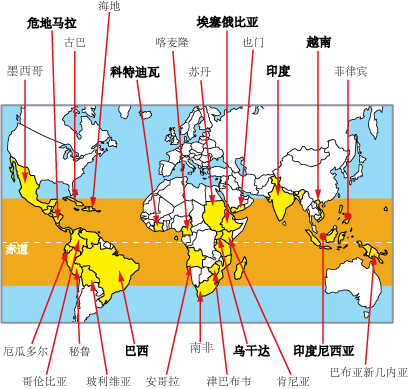
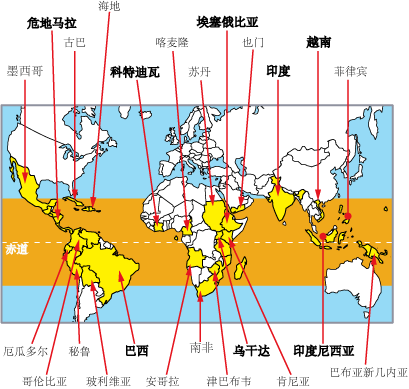
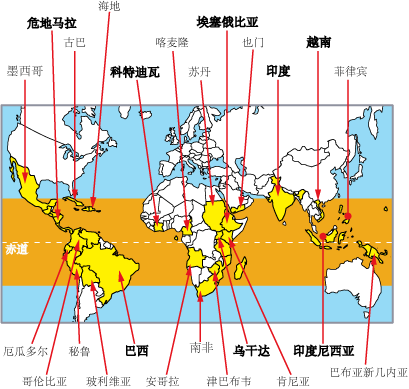
Coffee producing area 53 coffee producing areas in the world Peruvian coffee from Peru
Peru Peruvian coffee is high quality and balanced and can be used for mixed drinks. Peru (Peru) is also a big coffee producer. Up to 98% of Peruvian coffee is grown in forest areas, and most producers are small farmers. Peru has good economic conditions and a stable political situation, thus ensuring the good quality of coffee. However, there are many local problems, except guerrilla warfare and drug trafficking.
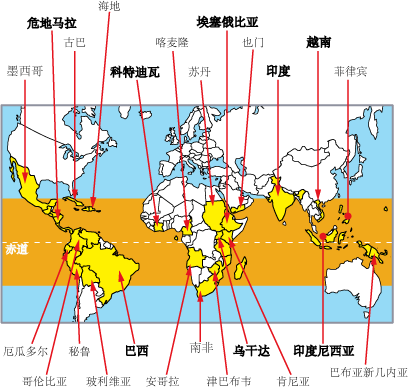
There are 53 coffee producing areas in the world. Galapagos Group, Galapagos Islands
Galapagos Islands Galapagos Islands coffee treasures from the hometown of giant turtles, this coffee treasure is of excellent quality and is grown without any chemicals. Coffee is grown in San Cristobal (Saint Crstbal). St. Cristobal is a larger island in the Galapagos Islands (Galapagos Islands) and the only light one in the archipelago.
Coffee producing area worldwide 53 coffee producing areas Salvadoran coffee pizza
El Salvador's unique, mild coffee. El Salvador is one of the small countries in Central America with a dense population. The flavor of its coffee is characterized by excellent balance. Today, this coffee accounts for 40% of the country's exports. 35% of the extra hard beans of the best coffee are exported to Germany from January to March. In the early 1990s, the guerrilla war wreaked havoc
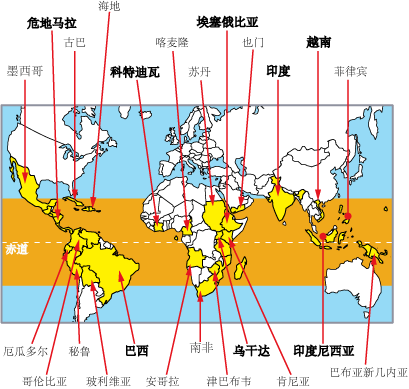
Coffee producing area 53 coffee producing areas in the world Mexican coffee from Mexico
Mexico coffee from the world's fourth largest coffee producer, slippery and fragrant Mexico, the fourth largest coffee producer in the world, produces about 5 million bags of coffee a year. Most of its coffee is produced by nearly 100000 small farmers, and large estates that once manipulated the coffee industry are rare. The yield of Mexican coffee is about 630 kg per hectare. Later, the Mexican caffeine Association (Institut)

Introduction of coffee from 53 coffee producing areas in El Salvador coffee beans
Unique, mild-tasting coffee. El Salvador is one of the small countries in Central America with a dense population. The flavor of its coffee is characterized by excellent balance. Today, this coffee accounts for 40% of the country's exports. 35% of the extra hard beans of the best coffee are exported to Germany from January to March. In the early 1990s, guerrilla warfare greatly damaged the country's national economy.
Coffee producing area 53 coffee producing areas worldwide Colombian coffee producing area Colombian coffee
Colombia Colombia is the world's largest producer of premium coffee! The traditional deep-roasted coffee has a strong and memorable flavor. In 1808, coffee was first introduced to Colombia, which was brought by a priest from the French Antilles via Venezuela. Today, the country is the second largest producer after Brazil, with an annual output of 13 million bags.
53 coffee producers around the world introduce the rich nutty hazelnut flavor of coffee-- measured Panama ELID
ElidaNatural Manor [name]: Alida Manor Solar (ElidaNatural) [production area]: sun (Boquete) [Manor]: Alida Manor (Elida) [varieties]: Catuai85%, TypicaBourbon15%, Geisha (a small amount) [treatment]: sun (Natural) [altitude]: above 1800 m [planting soil]: volcanic soil
There are 53 coffee producing areas in the world. Puerto Rico Coffee.
In 1736, coffee trees were introduced from Martinique to Puerto Rico (Puertp Rico). Most of the early coffee was grown by immigrants from Corsica. By 1896, Puerto Rico was the sixth largest exporter of coffee in the world, with most coffee shipped to France, Italy, Spain and Cuba. 19th century coffee manor

53 coffee producing areas around the world introduce water washing, fermentation and sun exposure to El Pacamara Ataisi.
Many coffee lovers will not know the country of El Salvador, which is located in Central America, bordered by Guatemala and Honduras in the north, and the Pacific coastline in the west and south. El Salvador is the smallest country in Central America and the most densely populated country in Central America. The topography is mainly mountainous and plateau, with many volcanoes. Santa Ana active volcano is 2385 meters above sea level.
How about Costa Rican coffee? 53 global coffee producing areas introduce Costa Rican coffee brands
The coffee beans produced at the high latitudes of Costa Rica are famous in the world, full-bodied, mild in taste, but extremely sour. The coffee beans here have been carefully processed, which is why they have high quality coffee. Located in the south of SanJos, the capital of Tarasu, Costa Rica is one of the most valued coffee growers in the country. Tarasu in Costa Rica (

53 coffee producing areas in the world
One. Costa Rican coffee is full of particles, ideal acidity and unique aroma. Tarrazu in Costa Rica is one of the main coffee producing areas in the world. The coffee produced is light and pure in flavor and pleasant in aroma. Costa Rica's volcanic soils are fertile and well drained, making it the first country in Central America to grow coffee and bananas for commercial value. Coffee and Fragrance

Ethiopian Coffee Lim Region Flavor Ethiopian Fine Coffee Bean Introduction
Coffee bugs, in previous installments we learned about the origins and spread of coffee, so where does the coffee we drink today come from? Next, follow Xiao one to explore coffee producing areas around the world ~ Coffee 53 producing areas currently have 53 major coffee producing areas in the world, all distributed in the coffee belt "25N~30S". We're tracking the spread of specialty coffee
Introduction of Coffee from 53 Coffee producing areas in the World (4)
thirty-one. Rwanda quality coffee comes from washed Arabica beans, which has a unique and perfect flavor. Rwanda (Rwanda) coffee is absolutely high quality in terms of its washed Arabica beans. As far as Africa is concerned, its coffee industry stands out because the country thrives mainly by producing the best possible beans. The taste of Rwandan coffee is described as a grassy aroma

53 coffee producing areas in the world
Seven. Haiti's Good Coffee from Politically Troubled Land Despite its well-known problems and fluctuating coffee quality, Haiti is still trying to produce some quality coffee. Most of the coffee produced in Haiti is grown in a purely natural state, not intentionally but as a result of material shortages, because farmers are too poor to buy
How to use the coffee powder press how to use the powder press
Why are there different sizes of powder hammers? In fact, there are two sizes of powder hammer, the small size is about 49mm to 53mm (4.0cm to 5.2cm), and the large size is from 57.5mm to 58.5mm (5.75cm to 58.5cm). The difference in specification is mainly due to the problems of household Italian machines and commercial coffee machines. Large powder bowls are commonly used in commercial businesses, and every coffee maker company

Boutique Coffee introduction of 53 Coffee producing areas in the World 4
twenty-three. Angola, once a big coffee producer, exported 3.5 million bags of coffee a year in the mid-1970s, 98 per cent of which was Roberts (probably the best in Africa), but total production fell to 200000 bags in 1990. The best brands in Angola used to be Ambriz and Amborm.

Boutique Coffee introduction to 53 Coffee producing areas around the World
forty-four. In 1715, the first coffee trees (about 40) were transported from the Yemeni port of Moka to La Runion, but unfortunately only two survived. By 1719, coffee plantations had flourished and the first beans were sold. Over the next few years, the government took a hard measure: the islanders, black and white, had to plant 100 coffee trees a year.

He just wanted to make a coffee table, but accidentally made a twin-turbine supercar!
It took five years for a car fan to transform his 974 yuan (£100) Ford Ford Granada into a 9.74 million (£1m) supercar Pagani with parts he bought on eBay. Nick Truman, a 53-year-old car fan, originally wanted DIY to make a coffee table, but found the size of the parts.

Boutique Coffee introduction to 53 Coffee producing areas in the World 5
thirty-five. Tanzania gourmet coffee has soft acidity and attractive aroma, which is absolutely worth enjoying. Coffee exports from Tanzania (Tanzania) play an important role in the whole national economy. Bean-shaped berry coffee is very productive and is said to be more fragrant than ordinary coffee. Generally speaking, the coffee beans in Tanzania have an extraordinary quality. For example, begging nearby
Introduction of Coffee from 53 Coffee producing areas in the World (3)
twenty-one. Venezuela oil was once considered the main export of Venezuela (Venezuela). Although coffee trees were introduced from Martinique in 1730 and Venezuela, coffee production was almost abandoned at the height of the oil industry. Recently, coffee plantations have begun to recover, with original Tipica and bourbon coffee trees and new plantations